
Eric Swalwell: Rise & Fall in 2026 Governor Race
Explore the rise and fall of Eric Swalwell in our comprehensive 7,000-word analysis of his 2026 California governor campaign, encompassing sexual assault allegations and his legislative legacy in Congress.

1. Introduction: The High-Stakes Career of Eric Swalwell
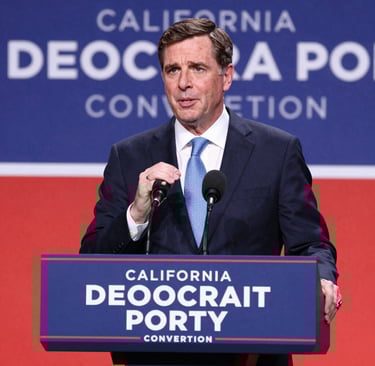
In the arena of modern American politics, few figures have polarized the public or embraced the "digital-first" political age as aggressively as Eric Swalwell. Known for his rapid-fire social media presence and his central role in the impeachment trials of Donald Trump, Swalwell has spent over a decade branding himself as a champion of "The Future."
However, as of Sunday, April 12, 2026, the narrative of Swalwell’s career has taken its most dramatic turn yet. Following serious allegations of misconduct, Swalwell has suspended his high-profile campaign for Governor of California. This blog explores how he got here, the impact of his legislative work, and the details of the crisis currently threatening his seat in Congress.
2. Early Life: The Republican Son and the Soccer Scholarship
Eric Michael Swalwell was born on November 16, 1980, in Sac City, Iowa. To those who only know his modern progressive stances, his background is surprising: he was raised in a staunchly Republican household.
2.1 The Iowa Roots
His father, Eric Nelson Swalwell, served as the police chief in Algona, Iowa. Growing up as the oldest of four boys, Swalwell’s early life was defined by the quintessential "cop’s kid" upbringing—discipline, community service, and sports.
2.2 The "Fighting Camels" and a Fateful Injury
Swalwell’s ticket out of his hometown was a Division I soccer scholarship to Campbell University in North Carolina. However, his athletic dreams ended abruptly in 2001 when he broke both of his thumbs. This injury forced him to pivot toward politics, leading to his transfer to the University of Maryland, College Park.
3. The Path to Power: Prosecutor to Congressman
After earning his Juris Doctor from the University of Maryland Francis King Carey School of Law in 2006, Swalwell returned to California.
3.1 The Alameda County Prosecutor
Swalwell’s time as a Deputy District Attorney in Alameda County was instrumental in shaping his "tough but fair" political persona. He famously led the Hate Crimes Unit, a role he frequently cites when discussing civil rights and protection for vulnerable communities.
3.2 The 2012 Upset
In 2012, at just 31 years old, Swalwell pulled off one of the biggest political upsets in California history. He challenged Pete Stark, a 40-year incumbent and a fixture of the Democratic establishment. By running a campaign focused on "new energy" and "passing the torch," Swalwell defeated Stark, becoming the representative for California’s 15th (now 14th) District.
4. Legislative Identity: Technology, Security, and Personalized Medicine
Swalwell’s tenure in Congress has been defined by his committee assignments and his focus on the intersection of national security and emerging technology.
4.1 The Intelligence Committee
Swalwell spent eight years on the House Intelligence Committee. He was a vocal leader in the investigation into Russian interference in the 2016 election. This role made him a frequent guest on cable news but also a primary target for Republican criticism, particularly regarding his past contact with a suspected Chinese operative, Christine Fang—an issue that resurfaced during his 2026 gubernatorial bid.
4.2 Caucuses for the Future
Swalwell founded two significant bipartisan caucuses:
Congressional Critical Materials Caucus: Focused on ensuring a secure supply chain for materials used in high-tech manufacturing.
Personalized Medicine Caucus: Advocating for the use of genetic and genomic testing to customize medical treatments.
5. The 2026 Gubernatorial Campaign: "Building a California You Can Afford"
In early 2026, Swalwell announced he would forgo re-election to Congress to run for Governor of California. His platform was built on two pillars: Affordability and Protection.
5.1 The "CalApp" Vision
Swalwell proposed a radical modernization of state government through "CalApp," a unified digital portal to replace 150+ state agency websites. He argued that California should lead the world in "digital governance."
5.2 Environmental "Wood for Good"
To tackle the housing crisis and wildfires simultaneously, he introduced the "Wood for Good" initiative—converting hazardous forest overgrowth into fire-resistant engineered wood for affordable housing.
6. The April 2026 Crisis: Allegations and Suspension
The momentum of Swalwell’s campaign halted abruptly in April 2026.
6.1 The Allegations
On Friday, April 10, reports from CNN and the San Francisco Chronicle detailed allegations of sexual misconduct from four women. These included a former congressional staffer who alleged an incident in New York in 2024. Swalwell has vehemently denied these claims, calling them "absolutely false."
6.2 The Campaign Suspension
On the evening of Sunday, April 12, 2026, Swalwell posted a social media update:
"To my family, staff, friends, and supporters, I am deeply sorry for mistakes in judgment I've made in my past. I will fight the serious, false allegations that have been made—but that’s my fight, not a campaign’s."
While his name remains on the June primary ballot due to filing deadlines, the suspension marks a catastrophic blow to his political future.
Crytoflux
Explore our sleek website template for seamless navigation.
Contact
Newsletter
info@email.com
123-123-1234
© 2024. All rights reserved.