
The April Apocalypse: Navigating the 2026 Sierra Nevada Winter Storm Warning
Emergency Update: 3 feet of snow projected for the Sierra Nevada as a Winter Storm Warning remains in effect through Sunday, April 12, 2026. Get live scores on accumulation, travel alerts for I-80, and the meteorological breakdown of this historic April event, Winter Storm Warning Sierra Nevada
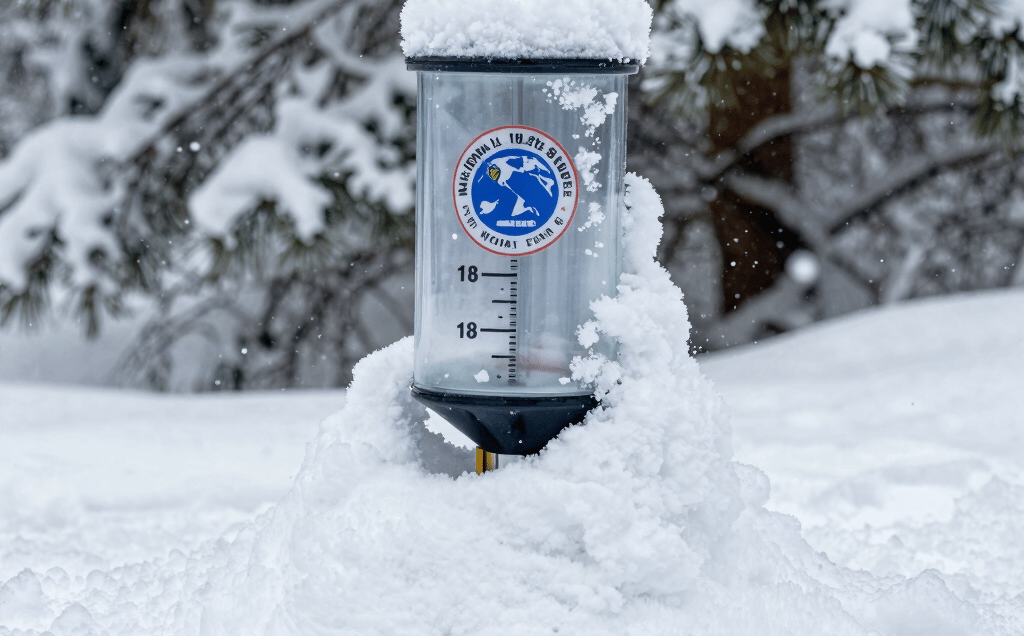
Last Updated: Sunday, April 12, 2026 – 11:45 PM PDT
Warning Status: Active through 11:00 PM tonight
Projected Totals: 12–36 inches above 6,000 feet
Volume I: The Immediate Crisis – Current Alerts and Conditions
As of late Sunday evening, the National Weather Service (NWS) has maintained a Winter Storm Warning for the West Slope of the Northern Sierra Nevada and the Greater Lake Tahoe area. While April is usually a month of thawing and "Spring Skiing," 2026 has decided to rewrite the rulebook.
1.1 The Numbers at a Glance
The storm, which surged south from the Gulf of Alaska late Saturday, has dropped staggering amounts of "Sierra Cement" (heavy, wet snow) across the range.
Kingvale/Blue Canyon: 14 inches recorded since Saturday night.
Mammoth Mountain: Reporting 22 inches at the summit, with winds gusting to 55 mph.
Donner Pass (I-80): Near-zero visibility reported throughout Sunday afternoon.
Tioga Pass: Remains closed, buried under a fresh 2-foot layer of accumulation.
1.2 The "Danger Zone" Elevation
The snow line has fluctuated wildly during this event. Earlier Sunday, rain was falling as high as 5,000 feet, but as the cold core of the low-pressure system centered over the range, the snow line plummeted to 4,000 feet.
Alert: For those in Chester, Quincy, or Blue Canyon, travel is strictly discouraged. The combination of wet snow and gusty winds has turned local roads into skating rinks topped with heavy slush.
Volume II: Meteorological Deep Dive – The "Gulf of Alaska" Engine
To understand why this storm is so potent, we have to look at the atmospheric dynamics of the April 2026 Trough.
2.1 Orographic Lifting and the Sierra Block
The Sierra Nevada acts as a giant 400-mile-long wall. As the moist, cold air from the Pacific is shoved against the Western Slope, it undergoes orographic lifting. The air is forced upward, cools rapidly (adiabatic cooling), and wrings out its moisture in the form of intense snowfall.
In this specific storm, we are seeing a "classic" cold-core setup. Unlike the "Atmospheric Rivers" we saw in January, which were warm and fueled by tropical moisture (The Pineapple Express), this April storm is a "Polar Plunge." It lacks the sheer water volume of a tropical system but makes up for it with incredibly low temperatures and high snow-to-liquid ratios at the peaks.
2.2 The Wind Factor: Why it’s a "Blizzard-Lite"
While the NWS has stopped short of a full Blizzard Warning for all areas, the ridgetop winds have reached 70+ mph today. This creates "ground blizzard" conditions where fallen snow is whipped into a frenzy, making it impossible for Caltrans snowplows to keep up with the drifts on Highway 50 and I-80.
Volume III: The 2026 Context – From "Snow-Drought" to "Snow-Dump"
This storm is particularly shocking because of what happened just weeks ago. In March 2026, California experienced its hottest and driest March on record.
3.1 The April 1st "Zero" Survey
On April 1, 2026, the Department of Water Resources (DWR) conducted its critical snow survey at Phillips Station. The result? No measurable snow. The state's "frozen reservoir" had essentially vanished due to a freak spring heatwave.
3.2 The Great Recovery?
While this 2-foot dump is a welcome sight for skiers, it is a drop in the bucket for California’s water managers. Heavy, wet April snow melts fast. However, it provides a crucial "thermal blanket" for the soil, slowing down the evaporation of what little moisture remains in the watershed.
Volume IV: Survival & Logistics – Travel at Your Own Risk
If you are currently caught in the warning area or planning a "Powder Chase" for Monday morning, you must adhere to the following protocols.
4.1 Chain Requirements and Road Closures
Caltrans has implemented R2 chain requirements for almost all trans-Sierra routes.
R1: Chains required on all vehicles except quad-drive/four-wheel drive with snow tires.
R2: Chains required on all vehicles except quad-drive/four-wheel drive with snow tires on all four wheels.
R3: Chains required on ALL vehicles, no exceptions. (Note: R3 usually results in a full road closure).
4.2 The "Tree Well" Danger
With 2-3 feet of fresh powder, the risk of Snow Immersion Suffocation (SIS) is at its seasonal peak. Tree wells—the hollow space of deep snow around the base of a conifer—act like quicksand. If you are skiing at Northstar or Heavenly this Monday, never ski alone.
Volume V: The Economic Pulse – Ski Resorts in the "Second Spring"
For resort operators at Palisades Tahoe and Kirkwood, this storm is a financial lifeline.
5.1 Extending the Season
Most resorts were eyeing an early closing date in mid-April. This storm likely pushes the "Closing Day" parties into May. The "Monday Powder Day" (April 13) is expected to be one of the busiest Mondays of the year, as "sick days" are called in from San Francisco to Reno.
5.2 The High Cost of Snow Removal
While the snow brings ticket sales, it also brings overhead. Diesel costs for snowcats and the labor for avalanche mitigation (firing gas cannons and hand-charging slopes) can cost a major resort upwards of $50,000 per day during a major warning event.
Volume VI: Historical Perspective – Late Season Saviors
Is an April storm rare? Not entirely. We look back at the Historic May 2023 storm and the 1982 "Big Dump." The Sierra Nevada is a range of extremes. In 2026, we are seeing a phenomenon known as Climate Whiplash—the rapid oscillation between record heat and record cold.
Crytoflux
Explore our sleek website template for seamless navigation.
Contact
Newsletter
info@email.com
123-123-1234
© 2024. All rights reserved.